What Is a Waterproof Mattress Cover and Why Do You Need One?
A mattress is one of the most expensive and important investments you will make for your home. You spend nearly a third of your life sleeping on it, yet it remains highly vulnerable to everyday accidents, sweat, and microscopic allergens. Over time, these seemingly minor exposures quietly degrade the comfort and hygiene of even the most premium mattresses.
Many people assume that a standard bedsheet is enough to keep their bed clean. Unfortunately, regular sheets absorb liquids and allow them to pass directly into the mattress fibers, where they are nearly impossible to remove. This is where investing in a high-quality waterproof mattress cover becomes essential.
In this guide, we will explain exactly how modern waterproof protectors work, the hidden benefits they offer beyond spill protection, and how to choose the right one for your bedroom.
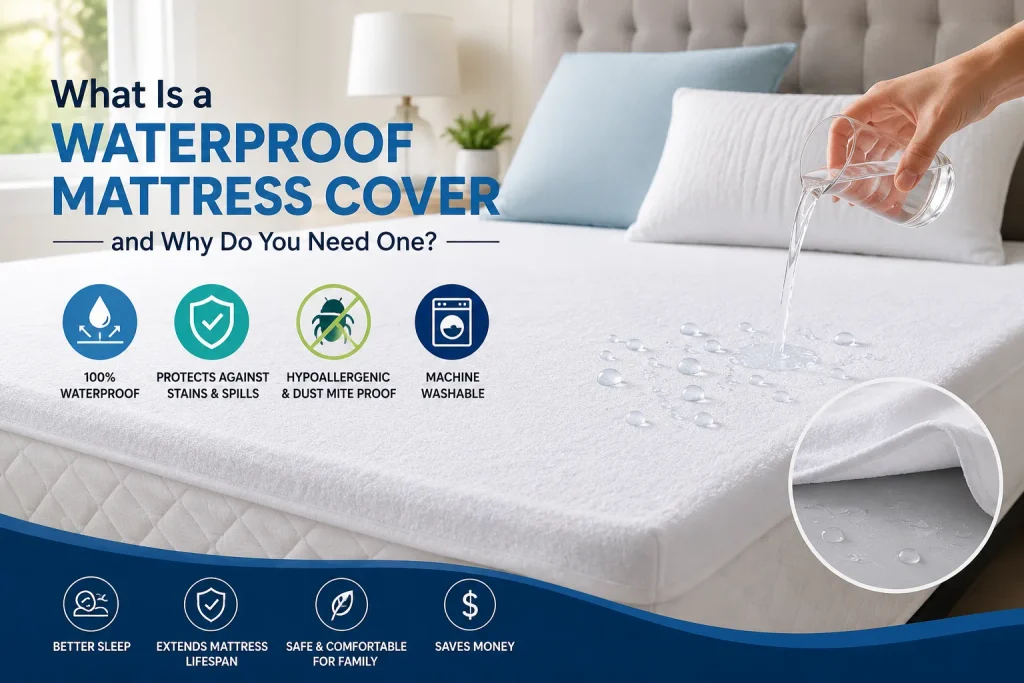
What Exactly Is a Waterproof Mattress Cover?
A waterproof mattress cover is a specialized protective layer designed to repel liquids, block allergens, and preserve the structural integrity of your mattress.
Historically, waterproof covers had a bad reputation. Older models were made from thick, stiff vinyl that felt like sleeping on a loud, crinkly plastic bag and caused sleepers to overheat.
Modern covers have revolutionized mattress protection by utilizing Thermoplastic Polyurethane (TPU). This advanced backing is completely noiseless and highly breathable. The microscopic pores in a TPU membrane are small enough to block liquid molecules (like water, coffee, or urine) and dust mites, but large enough to allow air and vapor to pass through freely. This means you get 100% waterproof protection without sacrificing a cool, comfortable night’s sleep. Unlike older PVC-based materials, TPU is also non-toxic and environmentally friendlier, making it a safer choice for children and adults alike.
5 Reasons Why You Absolutely Need One
Adding a protective layer to your bed is about much more than just preventing stains. Here are the top five reasons why every mattress needs a waterproof cover.
1. Protects Against Spills and Stains
Whether you enjoy drinking morning coffee in bed, have pets that sleep with you, or are potty-training young children, liquid accidents are inevitable. A waterproof barrier stops liquids from soaking into the mattress upholstery, preventing unsightly stains and lingering odors. Even small, unnoticed spills can accumulate over months, eventually producing a persistent smell that no surface cleaning can fix.
2. Preserves Your Mattress Warranty
This is a critical factor that many buyers overlook. Most mattress manufacturers include a strict void clause in their warranties regarding stains. If your mattress develops a structural defect (like a sagging spring) but has a single visible water mark or stain, the manufacturer can legally void the warranty and refuse a return or exchange. A protector acts as an inexpensive insurance policy for your warranty.
3. Defends Against Dust Mites and Allergens
Every night, humans shed thousands of dead skin cells. In an unprotected bed, these cells settle deep into the mattress fibers, creating a perfect breeding ground for dust mites. The droppings from dust mites are a leading cause of indoor allergies and asthma flare-ups. A waterproof cover acts as an impenetrable barrier, cutting off the food supply for dust mites and keeping your sleeping environment hypoallergenic.
4. Prevents Mold and Mildew Growth
The average adult loses up to a pint of moisture each night through sweat and exhalation. When this moisture seeps into the foam or inner springs of a dark, warm mattress, it creates the perfect conditions for mold and mildew. A waterproof layer stops this moisture transfer entirely, keeping the interior of your bed dry and sanitary. This is especially important in humid climates, where trapped moisture can lead to visible mold colonies within just a few months.
5. Extends the Lifespan of Your Mattress
Foam and internal padding degrade much faster when exposed to moisture, oils, and salt from human sweat. By keeping these elements out, a protective cover ensures that the materials inside your mattress retain their supportive qualities for years longer, maximizing the return on your investment.
Types of Waterproof Mattress Protectors
When shopping for a cover, you will generally encounter two main designs, each serving a slightly different purpose.
- Fitted Sheet Style (Five-Sided): This is the most popular style. It features an elastic skirt that stretches over the top and four sides of the mattress, just like a standard fitted sheet. It is incredibly easy to put on and remove for weekly washing.
- Full Encasement (Six-Sided): This style slides entirely over the mattress and zips closed, sealing it from the top, bottom, and all four sides. While it is more difficult to remove for washing, an encasement is the best choice for severe allergy sufferers or those looking for absolute protection against bed bugs.
Buying Guide: What to Look for Before Purchasing
To ensure you get a protector that is both effective and comfortable, keep these features in mind:
- Breathable Surface Material: Look for a cover with a soft top layer made from cotton-terry, bamboo, or microfiber. This fabric layer absorbs minor surface moisture and provides a soft, silent buffer above the waterproof TPU backing.
- Deep Pockets: Modern pillow-top and memory foam mattresses can be incredibly thick. Check the depth capacity of the cover’s skirt (look for depths between 14 to 18 inches) to ensure it can grip the bottom of the mattress securely without slipping off the corners during the night.
- Noiseless Guarantee: Double-check that the product description specifies a noiseless or crinkle-free design to avoid disrupting your sleep.
How to Wash and Maintain Your Cover
To keep your waterproof membrane functioning perfectly, you must wash it correctly. Improper laundering is the number one reason these protectors fail.
- Washing: Wash the cover in cold or warm water using a mild laundry detergent. Never use bleach or harsh dry-cleaning chemicals, as they will eat through the waterproof polyurethane layer. Fabric softeners should also be avoided, as they leave a waxy residue that can clog the breathable pores of the TPU membrane.
- Drying: This is the most critical step. Tumble dry the cover on LOW heat or air dry it. High heat in a dryer will melt and blister the TPU backing, destroying its ability to block liquids.
Conclusion
A high-quality mattress is the foundation of good health and daily energy. Leaving it unprotected exposes it to irreversible damage from spills, sweat, and allergens. By spending a fraction of the cost of the mattress on a premium waterproof cover, you ensure your bed remains hygienic, supportive, and perfectly clean for years to come.
Frequently Asked Questions (FAQs)
Do waterproof mattress covers make you sweat?
No, provided you choose the right material. Older vinyl covers trapped body heat, but modern covers use a breathable TPU membrane paired with top layers like cotton or bamboo to promote airflow and regulate temperature.
Can you put an electric blanket or heated mattress pad over a waterproof cover?
Yes, but you must place the electric blanket on top of the waterproof cover, not underneath it. This protects the mattress from spills while ensuring the direct heat doesn’t degrade the waterproof backing over time.
How often should you wash a waterproof mattress cover?
For general hygiene, you should wash your mattress cover every one to two months alongside your regular bedding. However, if there is a direct spill or accident, you should strip the bed and wash the cover immediately.